£10,000 Bonus UK Tax: What You Actually Take Home in 2026/27 (And How to Keep More)
The first time we received a bonus of any real size, we made the obvious mistake. We saw the number in the offer letter, divided by twelve, and started making plans. When it landed, it was considerably less than that. Not because anything had gone wrong. Because we had planned from the gross figure without thinking about what the tax system would take first.
It is a very common mistake. It is also avoidable.
What most people do wrong
Most people plan from the gross bonus number. They see £10,000, they think £10,000. They might vaguely factor in “some tax” and mentally adjust to something like £7,000 or £8,000. The actual number for a higher rate taxpayer is materially lower than that, and the gap between expectation and reality has a habit of causing bad decisions.
The second mistake is treating the bonus as found money rather than income. It is income. It is taxed as income. And if it lands in a month where it pushes total PAYE earnings significantly higher than usual, the tax code can overcollect in that month before being corrected across the year.
What is actually happening
A bonus is taxed as employment income. It goes through PAYE in the month it is paid, which means it is added to your salary for that month and taxed at your marginal rate.
Official income tax rates and personal allowance can be found here.
For someone earning £60,000, the position looks like this.
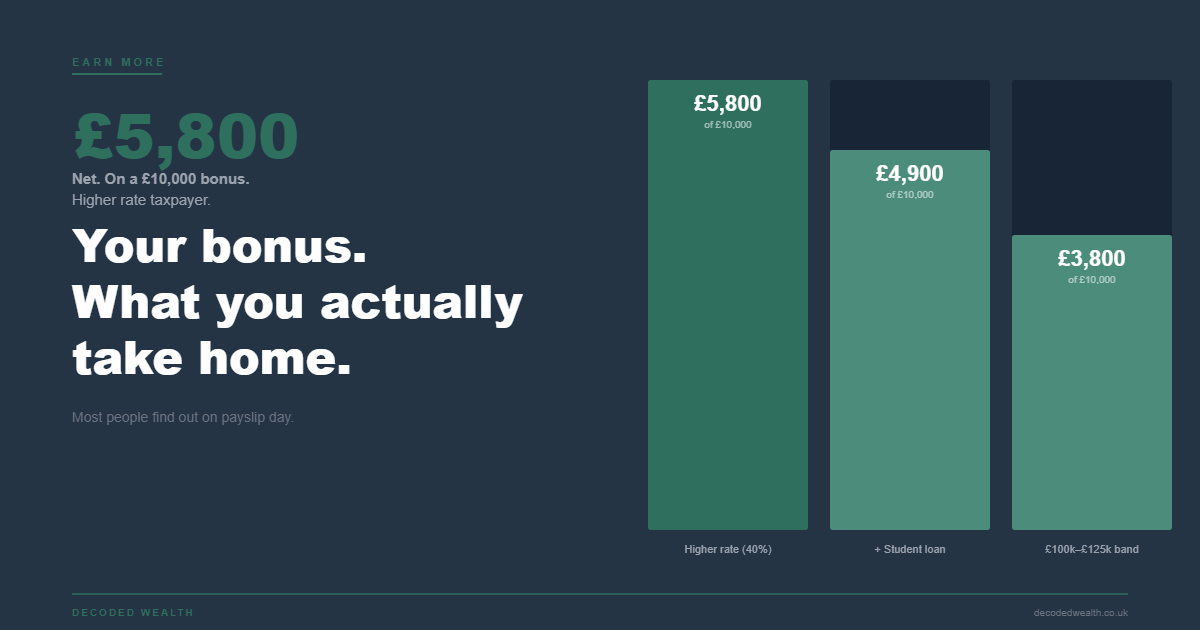
£10,000 gross bonus, no student loan: Income tax at 40% on the full bonus: £4,000. National Insurance at 2% (above the upper earnings limit): £200. Net bonus: approximately £5,800.
£10,000 gross bonus, with Plan 2 student loan: Income tax at 40%: £4,000. NI at 2%: £200 (National Insurance rates). Student loan at 9% on the bonus amount above the threshold (which the monthly annualised figure will determine, but at £60,000 the full bonus is above the threshold): approximately £900. Net bonus: approximately £4,900.
For someone earning between £100,000 and £125,140, a bonus landing in that band triggers the personal allowance taper. The effective marginal rate on that income becomes 60%. A £10,000 bonus in that range pays approximately £3,800 net. Most people in that position do not know this until they see the payslip.
The pension sacrifice option is the move most people at this income level are not using. Many employers allow you to sacrifice part or all of a bonus into your pension before it is taxed. The full gross amount goes into the pension wrapper. You pay no income tax, no National Insurance, and no student loan deduction on the sacrificed amount. For a higher rate taxpayer sacrificing a £10,000 bonus rather than receiving it in cash, the saving is approximately £4,200 versus the cash net of £5,800. The question is whether the pension contribution is worth more to you than the cash, and at 40% tax relief the answer is usually yes if you are not yet at your annual allowance.
£10,000 Gross Bonus – What You Actually Take Home (2026/27)
| Your Annual Salary (before bonus) | Income Tax on Bonus | NI on Bonus | Student Loan (Plan 2) | Approx. Net Bonus |
|---|---|---|---|---|
| £60,000 (Higher rate, no student loan) | £4,000 (40%) | £200 (2%) | £0 | £5,800 |
| £60,000 (Higher rate + Plan 2 student loan) | £4,000 (40%) | £200 (2%) | £900 (9%) | £4,900 |
| £100,000 – £125,140 (Personal allowance taper) | £6,000+ (60% effective) | £200 (2%) | £900 (if applicable) | £3,800 |
Notes: These figures match the examples in the article. They assume the bonus is paid in one month through PAYE. National Insurance is charged at 2% above the upper earnings limit. The 60% effective rate comes from the personal allowance taper. Actual amounts can vary slightly depending on your tax code.
Frequently Asked Questions
How much tax on a £10,000 bonus in the UK?
At £60,000 income with no student loan, you take home approximately £5,800. With a Plan 2 student loan it drops to £4,900. Between £100,000 and £125,140, it can be as low as £3,800 due to the 60% tax trap.
Is a bonus taxed differently from salary?
No. It is added to your salary for the month and taxed at your marginal rate through PAYE.
Can pension sacrifice reduce bonus tax?
Yes. Many employers allow you to put the bonus into your pension before tax and National Insurance are deducted. This lets the full £10,000 go into your pension and can save you thousands compared to taking it as cash.
What is the 60% tax trap?
When your income is between £100,000 and £125,140, the personal allowance tapers away. This creates an effective 60% marginal tax rate on that portion of the bonus plus 2% National Insurance.
Does a bonus affect student loan repayments?
Yes. With Plan 2 you pay an extra 9% on the bonus. At £60,000 and above this usually means 9% on the full £10,000.
What should I do with my net bonus?
Decide its purpose before it arrives. For example, top up your ISA, overpay your mortgage or build your emergency fund. Planning ahead stops it from disappearing into general spending.
What we found
When we started treating bonuses as a deliberate decision rather than a windfall, two things changed.
The first was that we stopped being surprised by the net amount. Once you know the deduction rate at your income level, the number is predictable and you can plan around it properly.
The second was that we looked more carefully at what our employers allowed in terms of pension sacrifice on bonuses. Not all employers offer this, but most large employers do and many people simply have not asked. The HR or payroll team can confirm whether it is available before the bonus is processed. It is worth the conversation every time a bonus is coming, not after it has already been paid.
We also found that using some of the net bonus to top up an ISA rather than spending it immediately had a compounding effect over time that the cash equivalent would not have had. The bonus is one of the few moments in the year where a meaningful lump sum is available and can be directed deliberately.
What to do
Step 1. Calculate your net bonus before you make any plans.
Your gross bonus, minus income tax at your marginal rate, minus National Insurance at 2% above the upper earnings limit, minus any student loan repayment. That is what arrives. Build every decision around that number.
Step 2. Ask your employer whether you can sacrifice the bonus into your pension.
Do this before the bonus is processed, not after. If your employer offers bonus sacrifice, the full gross amount goes into your pension at no tax cost. At 40% relief this is the most efficient move available, assuming you have pension allowance remaining and can manage without the cash.
Step 3. If you are between £100,000 and £125,140, model the personal allowance impact.
A bonus landing in this range triggers the 60% effective rate. Pension sacrifice on the portion that would land in this band restores your personal allowance and reduces the effective rate significantly. This is worth specific attention each year a bonus is expected.
Step 4. Decide the purpose of the net bonus before it arrives.
Bonuses that arrive without a plan tend to disappear into general spending within weeks. Before the payment date, allocate it: ISA top-up, mortgage overpayment, emergency fund, or a specific goal. Making the decision in advance means the money does what you intend rather than what is easiest.
Step 5. Check your payslip after the bonus month.
PAYE can overcollect in the month a large bonus is paid if the system annualises the payment incorrectly. If your tax looks too high relative to what you calculated, contact HMRC or check your tax code. Overcollected tax is refunded across the remainder of the tax year automatically, but knowing it happened prevents unnecessary concern.
A bonus is the one moment each year where most people have both a lump sum and a choice. The difference between treating it as found money and treating it as a financial decision tends to compound over time in ways that are not obvious until much later.
Capital at risk. Investments can go down as well as up. This article is for informational purposes only and does not constitute financial advice. Decoded Wealth is not regulated by the FCA. Always do your own research before making financial decisions. This article may contain affiliate links. If you use them, we may earn a small commission at no extra cost to you.